

The Quiet Advantage
How Eastern Philosophy Is Rewriting the Rules of Modern Business and Social Capital


In an era defined by volatility, fragmentation, and chronic uncertainty, conventional strategy models often feel brittle.
PowerPoint frameworks, rigid KPIs, and top-down decision trees struggle to keep pace with a world shaped by pandemics, technological acceleration, geopolitical instability, and widespread burnout. What leaders increasingly need is not more control, but better orientation.
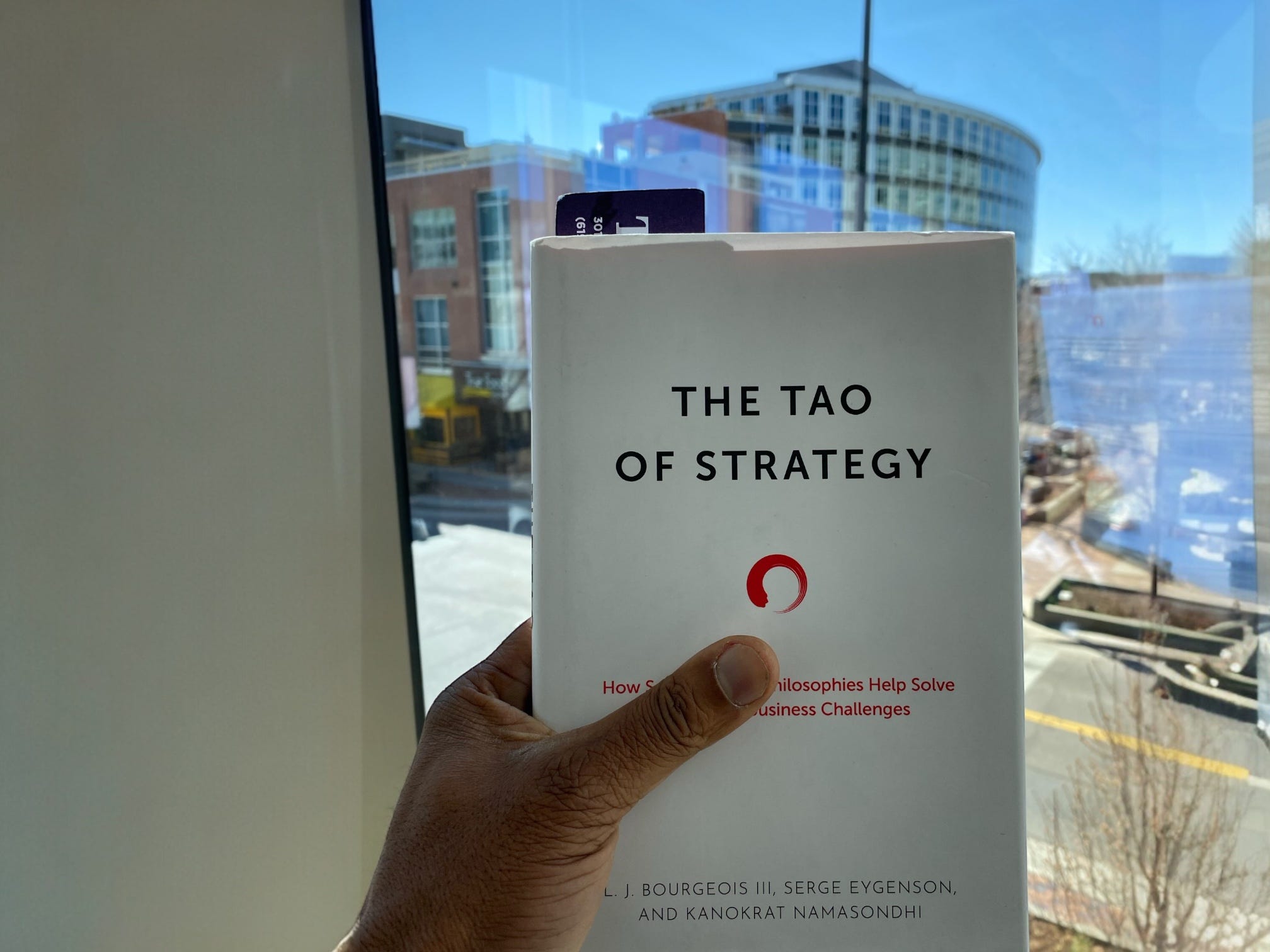
That is precisely the invitation offered by The Tao of Strategy: How Seven Eastern Philosophies Help Solve Twenty-First-Century Business Challenges, authored by Jay Bourgeois III, Serge Eygenson, and Kanokrat Namasondhi.
Rather than treating strategy as a mechanical exercise, the book reframes it as a living, relational, and emergent practice, one grounded in centuries-old Eastern wisdom and tested in modern boardrooms.
As stated in an excerpt from the book:
“The Tao of Strategy is about making and doing strategy. Specifically, our focus is on how leaders of institutions might achieve the creative insights that provide novel, and potentially winning, courses of action.
Our premise is that as important as Western analytical tools are in the process of understanding industries and competitors, true insights and novelty are achieved through what the Buddha called beginner’s mind, the state of mind characterized by emotional detachment from outcomes, abandonment of preconceived notions, and openness to learning as conditions unfold.”
Eastern Wisdom as Strategic Intelligence
At its core, The Tao of Strategy weaves together seven Eastern traditions, including Confucian ethics, Taoist non-forcing, Buddhist mindfulness, Hindu concepts of duty and detachment, Sun Tzu’s adaptive warfare, and the strategic elegance of the ancient board game Go. What emerges is not a spiritual detour from business realism, but a deeper form of strategic intelligence.
These traditions share a common insight: reality is dynamic, relational, and resistant to rigid control. Effective action arises not from domination, but from attunement. Strategy, in this view, is less about imposing will and more about sensing patterns, conserving energy, and acting at the right moment.
This reframing is particularly resonant in an age where leaders are discovering that relentless optimization often erodes trust, creativity, and morale. Eastern philosophy offers a counterbalance, one that prizes awareness over aggression and coherence over speed.
People First Is Not Soft, It Is Strategic
One of the book’s most compelling contributions is its insistence that people-first leadership is not a moral luxury but a strategic necessity. Drawing from Taoist and Confucian traditions, the authors argue that organizations thrive when leaders cultivate harmony, dignity, and mutual responsibility rather than fear and extraction.
This aligns seamlessly with the worldview of the Dave Alexander Center for Social Capital, which champions the idea that people are not a means to profit but the source of it. Social capital, defined as trust, shared purpose, and relational strength, becomes the true competitive advantage in complex environments.
The book’s case studies, spanning companies such as Komatsu, Infosys, Bank of America, Goldman Sachs, and Aston Martin, illustrate how leaders who honor human relationships consistently outperform those who rely solely on technical prowess or hierarchical control. These organizations succeed not because they eliminate uncertainty, but because they build cultures capable of absorbing it.
Leadership Without Ego in an Unpredictable World
A recurring theme throughout The Tao of Strategy is the discipline of ego detachment. Drawing from Taoism and Buddhism, the authors encourage leaders to loosen their attachment to being right, to winning every battle, or to preserving fixed identities.
This is not passivity. It is strategic humility.
Sun Tzu reminds us that rigidity invites defeat, while Taoist philosophy teaches that what is most effective is often quiet, indirect, and responsive. Leaders who cling to certainty in uncertain times tend to overreact, overcorrect, or overextend. Those who cultivate inner steadiness are better positioned to see clearly and move wisely.
In this sense, the book functions as training for unpredictability. Strategy becomes a practice of preparation rather than prediction, presence rather than projection.
Social Capital as the Ultimate Asset
What makes The Tao of Strategy especially relevant today is how naturally it dovetails with the Social Capital movement. The Dave Alexander Center for Social Capital argues that the real product of business is not merely goods or services, but the improvement of human life itself. Profits follow trust, not the other way around.
This insight echoes Adam Smith’s often-overlooked observation that human beings are inherently concerned with the well-being of others. Eastern philosophy reinforces this truth, reminding leaders that interconnectedness is not an idealistic fantasy, but a practical reality.
In a world where technological capital is increasingly commoditized, social capital becomes the differentiator. Organizations that invest in meaning, belonging, and shared responsibility are the ones most likely to endure.
A Strategy Book for the Long View
The Tao of Strategy is ultimately a book about playing the long game. Like Go rather than chess, it rewards patience, positioning, and an appreciation for emergent outcomes. It invites leaders to replace force with finesse, certainty with curiosity, and extraction with stewardship.
For executives, managers, and students navigating the twenty-first century’s complex terrain, this book offers more than insight. It offers orientation. And for those aligned with the mission of the Dave Alexander Center for Social Capital, it affirms a powerful truth: the future of business belongs to leaders who understand that people are the point.
Strategy, when rooted in wisdom, becomes not just a tool for success, but a contribution to humanity itself.
Join the movement.